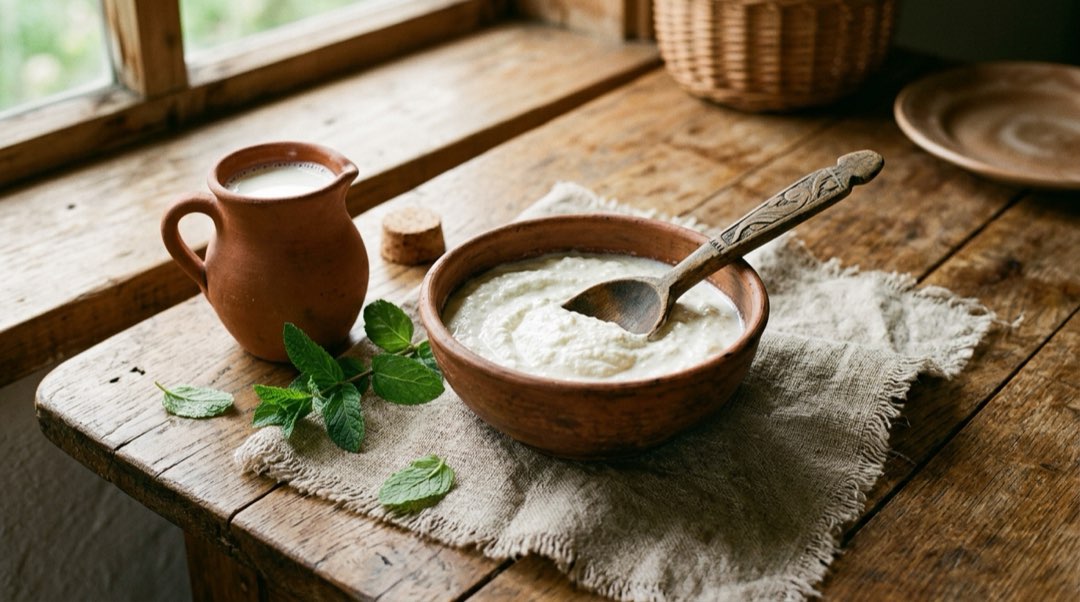
For nomadic tribes traversing boundless Eurasian steppes on horseback, fresh milk was simultaneously their primary sustenance and their most perishable staple. Preserving milk before it curdled in summer heat within hours was, in the truest sense, a matter of survival. Steppe dwellers wasted no time discovering nature's bacterial marvel: fermented milk not only evaded spoilage, but thickened into an enduring, digestible, and nutrient-packed food. Thus 'yoğurt,' bestowed upon global languages with its authentic Turkish etymology, stands as the fruit of this ingenious practical steppe ingenuity.
Today a vast chasm in flavor separates industrial homogenized yogurts lining supermarket aisles from traditional earthenware crocks fermented over hearths. Traditional yogurt demands patience. Milk simmered slowly in copper cauldrons is cooled until it no longer scalds the pinky finger; then a spoonful of starter mother yeast saved from yesterday is gently folded in. Wrapped swaddled in wool blankets like a newborn, the pot rests undisturbed for hours. Yogurt is not merely sustenance, but humanity's oldest and most delectable biological partnership forged with benevolent microbes.