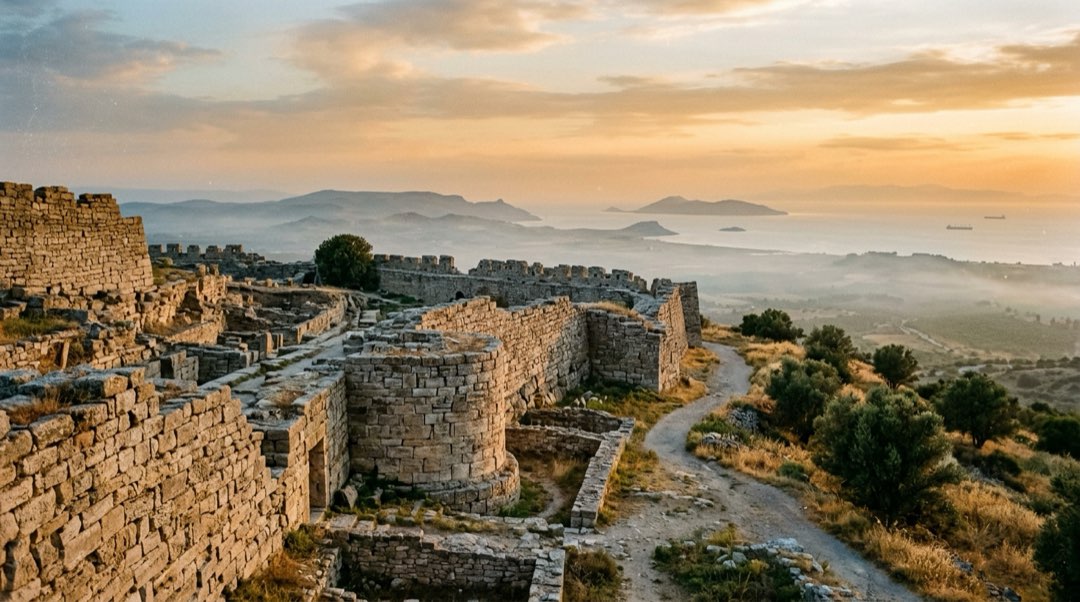
The mound of Hisarlık at the mouth of the Dardanelles stood at the heart of not only mythology, but also the most bustling trade routes of the ancient world. Fierce northerly winds and countercurrents sweeping toward the Black Sea often forced sailing vessels to anchor in these sheltered bays for weeks. By taxing these merchant fleets sheltering in their ports and providing navigational pilots, the Trojans amassed one of the most magnificent fortunes of their era. In other words, Troy's wealth arose not from a random legend, but from a geographic acumen that deftly harnessed the wind.
Although Homer's Iliad explains the war through the abduction of beautiful Helen and slighted honor, the core of the matter was far more worldly. Powers across the Aegean basin sought to seize the key to the maritime passage leading to the Black Sea's fertile grain stores and mineral deposits. The nine distinct settlement layers and traces of fire unearthed by archaeologists reveal the harsh, authentic history beneath the epic. The legend of the Trojan Horse may fade, but the human history shaped by the winds sweeping that mound endures.