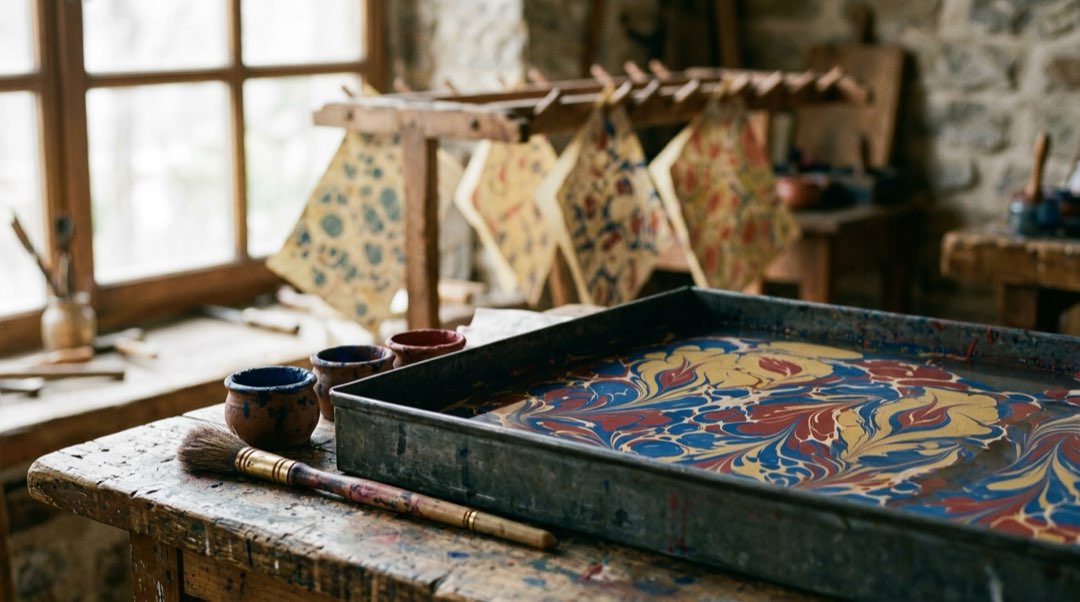
Stepping into a traditional ebru studio, one encounters a world markedly distinct from the sterile air of modern art galleries. Here the canvas is neither linen nor wood, but the placid surface of water thickened with natural tragacanth gum. Paints are sourced not from chemical factories but from colorful natural earths, conditioned with ox gall so they float atop the liquid. Flicking pigments with brushes of rose branches and horsehair, the artisan seeks not to subjugate water, but to strike a harmonious dialogue with its fluid grace.
The most enchanting aspect of ebru is that the artwork created on water is irreversibly transferred to paper in a single decisive motion. There is no second attempt. When the sheet is lifted gently from the rim of the trough, the water's surface remains immaculate, while the design is sealed forever into the paper fibers. Hence masters regard ebru not merely as a handicraft, but as visual discipline teaching patience, humility, and the grace of seizing the fleeting moment.