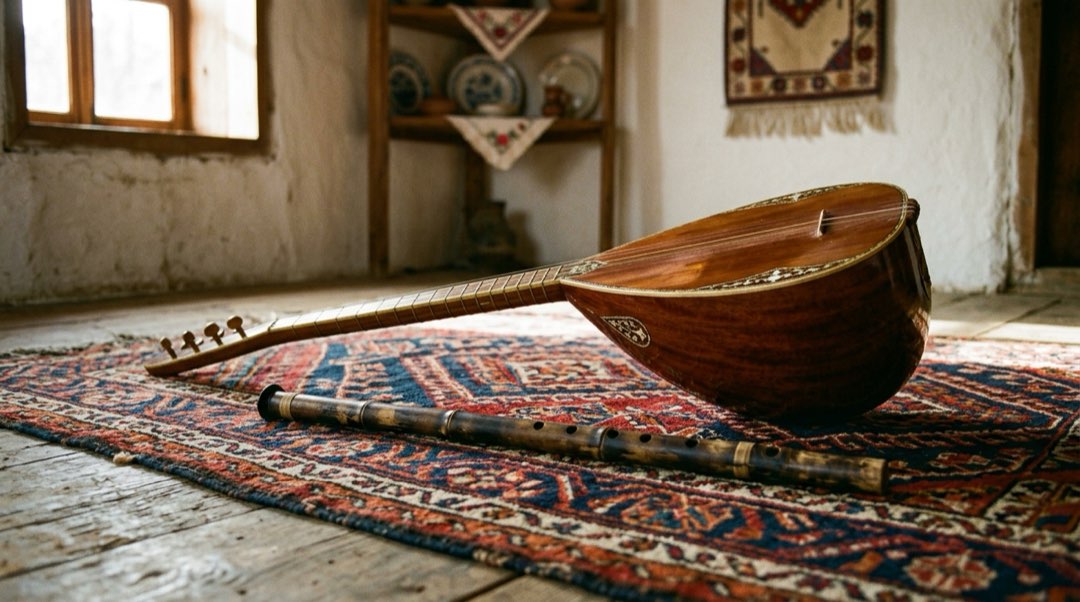
Anatolia's rich sonic realm was molded by the complementary resonances of two venerable instruments. One is the bağlama, ascending to the skies from the steppe's seasoned wood and steel strings; the other is the reed ney, harvested from marshlands and tempered by fire. At first glance, these two voices seem native to contrasting worlds. While the bağlama served in village squares and minstrel gatherings as an outcry against injustice or a tender ballad, the ney whispered patience and contemplation within palace salons and dervish lodges.
Yet upon closer listening, one realizes both strings and breath partake in the selfsame profound yearning. Rumi's Masnavi opens with the lament of the reed wailing over its uprooting from the marsh; it sings the exile of humanity distant from its true home. The bağlama likewise stands as the sanctuary for migrants, expatriates, and star-crossed lovers. One speaks via breath, the other through a plectrum; yet both articulate the millennia-old beating heart of Anatolia.