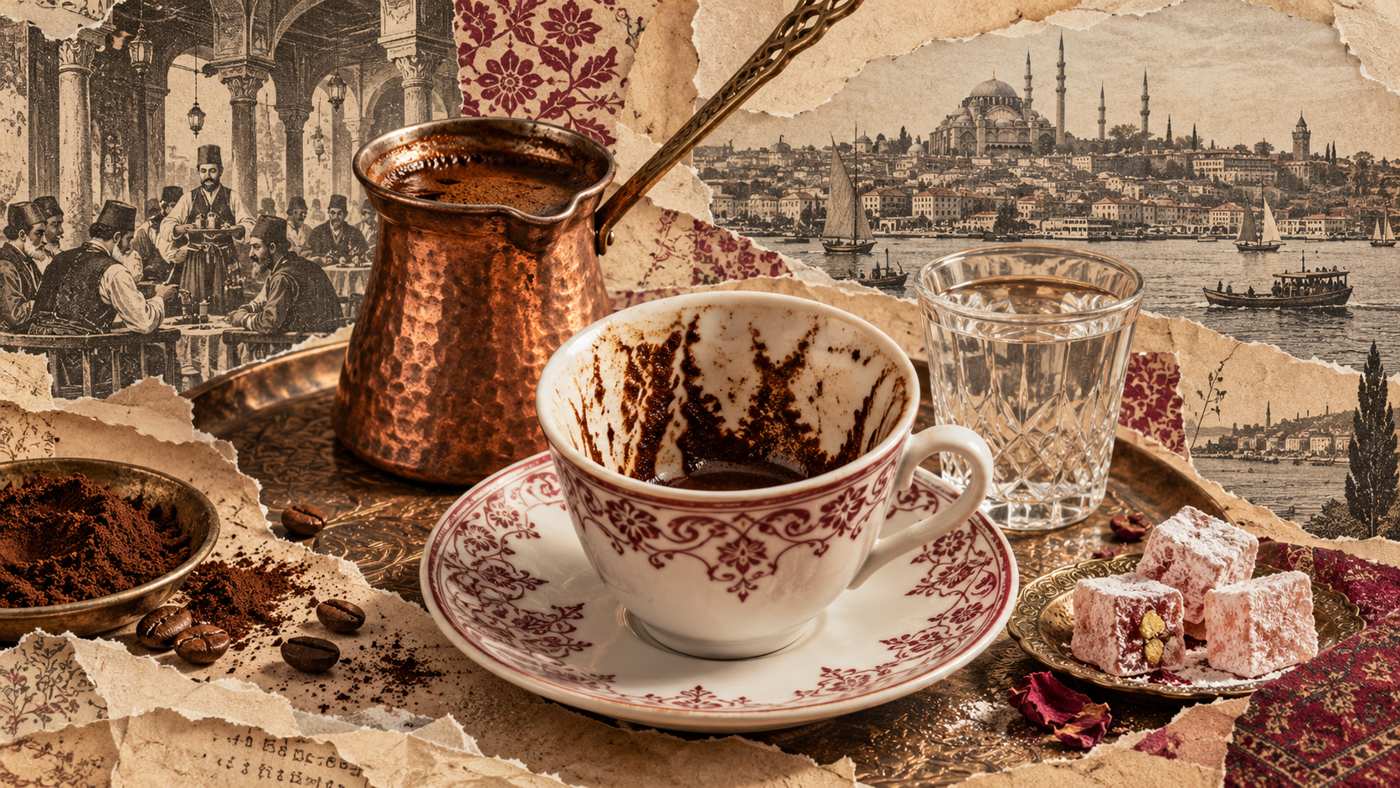
Coffee arrived in Istanbul, the Ottoman capital, in the 16th century. Meeting in coffee houses to share news and talk gradually became a feature of city life. Serving coffee at home and at family gatherings also helped coffee culture develop. Today, one of the interesting things about Turkish coffee is the range of everyday situations in which this small cup appears.
Its influence can even be seen in kahvaltı, the Turkish word for breakfast. The name comes from kahve altı, an expression associated with the food eaten before morning coffee. Knowing where a name comes from does not explain the full history of a meal. It would be misleading to view modern breakfast merely as preparation for coffee. Many people, after all, prefer tea at breakfast. Although the word has survived, people's daily habits can change.
The question asked before preparation, “Sade, orta or şekerli?”, is about personal taste. Sade coffee is made without sugar. Orta contains some sugar, while şekerli contains more; az şekerli is another option. These names describe the amount of added sugar, not the cup's size or the strength of the coffee. Since sugar is usually added during preparation, people are asked how much sugar they would like beforehand. As a result, the cups at the same table may contain different versions of the drink.
The water and Turkish delight served alongside coffee are part of the hospitality too. A few sips of water beforehand help clear other tastes from the mouth, allowing the coffee's flavour to be enjoyed more fully. Turkish delight provides something sweet alongside the strong flavour. It is therefore unsurprising that someone who chooses sade coffee might also eat Turkish delight: sweetness can be enjoyed beside the drink rather than in it. Although the details of the service vary, they offer a way of showing care for a guest.
At a kız isteme ceremony, the cup may contain a very different taste. During this family gathering before marriage, the bride-to-be sometimes puts salt in the groom-to-be's coffee instead of sugar. His reaction as he tastes it can turn into a memory the family talks about for years. This joke is not played in every home, however. The fact that coffee can be both a refreshment and a means of playful interaction at such a gathering illustrates its place in everyday relationships.
Once the cup is empty, fortune-telling sometimes follows. Because Turkish coffee is served unfiltered, grounds remain at the bottom. In one common practice, the cup is turned upside down on its saucer and lifted after it has cooled. A bird in the grounds may be associated with news, and a road with a journey, but the same shape can be interpreted differently by different people. These readings are not certain knowledge of the future. For some participants, the pleasure lies in wondering what a friend will say. From the breakfast table to salty coffee and fortune-telling, what these customs have in common is that coffee brings people together. The saying “A cup of coffee is remembered for forty years” suggests that the value of hospitality cannot be measured by the size of the cup.