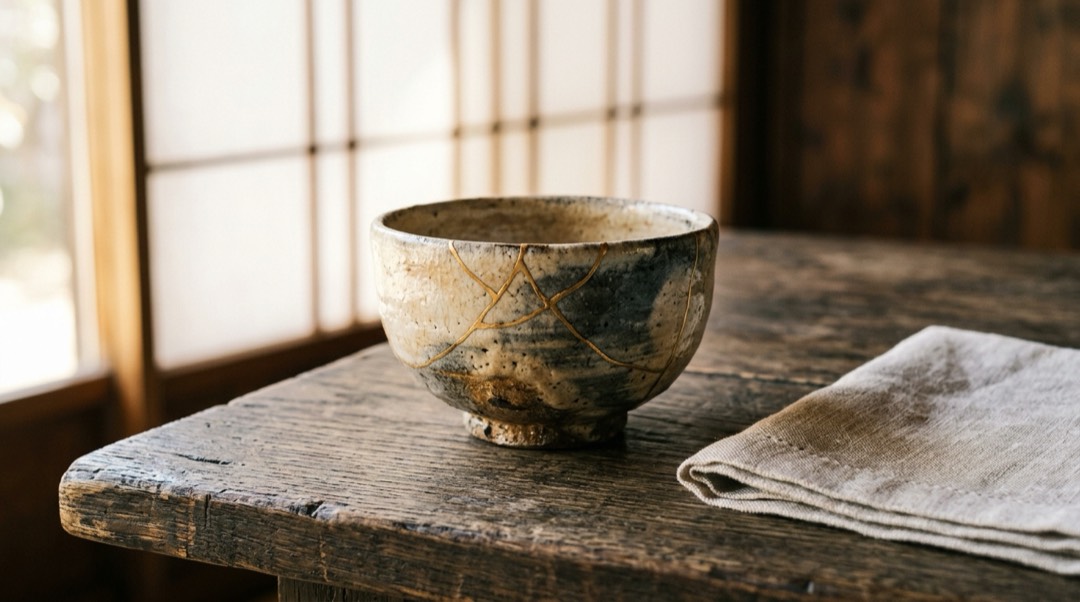
Choosing to repair a broken porcelain bowl with gold-infused urushi lacquer rather than discarding it may seem at first glance like a practical workshop solution. Yet the kintsugi tradition from the Muromachi period offers a quiet critique of Western restoration practices that attempt to conceal damage beneath seamless illusions. By illuminating the fracture lines with precious gold, Japanese artisans transform an object's temporal journey into an integral and respected element of its artistic identity. Making imperfections visible rather than erasing them represents a sincere respect for the material's lived experience.
This aesthetic stance draws directly from the ancient wabi-sabi worldview, which discovers profound meaning in natural transience and imperfection. It teaches us that life's disruptions and emotional wounds should not be treated as shameful defects, but acknowledged as honest milestones of maturity. Ultimately, much like a tea bowl reinforced with gold, human character emerges from crisis with renewed resilience and authentic dignity.