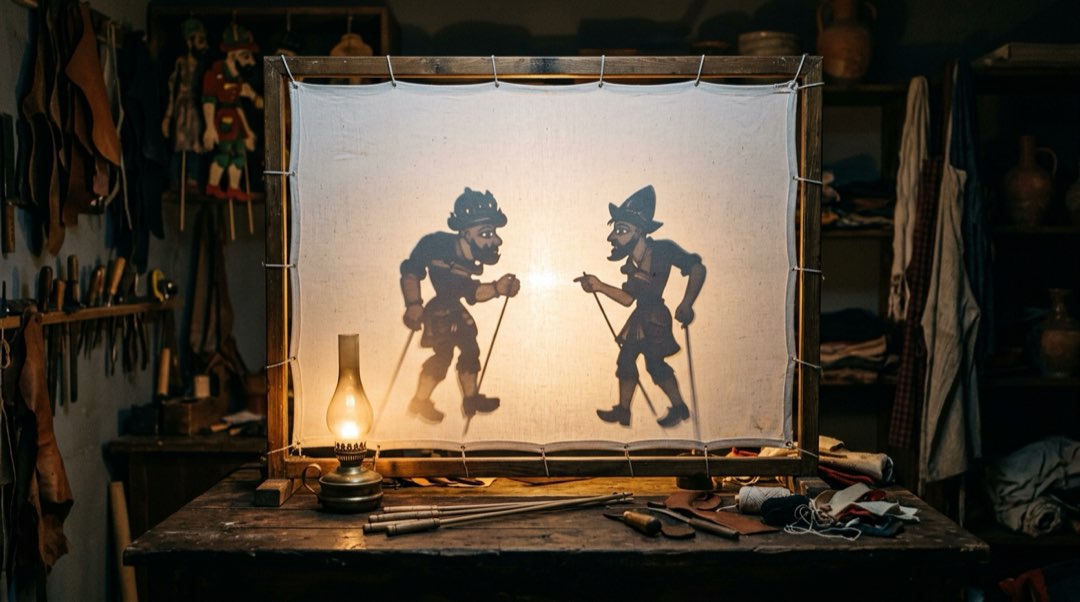
When candlelight flickers behind a taut white calico screen, all the voices, contradictions, and laughter of Ottoman urban life come alive. As puppets carved from camel or water buffalo leather and tinted with madder pigments glide on rods, spectators shed daily worries into an enchanting atmosphere. The central conflict is crystal clear: Karagöz, voicing the blunt, outspoken populace, confronts Hacivat, who speaks an ornate tongue, observant of decorum yet shrewd. The dialogue of this duo is essentially the commoner's witty negotiation with elite officialdom.
Karagöz shadow theater was never merely child's play. On the contrary, it served as a potent civic rostrum satirizing neighbourhood grievances, corrupt officials, and social inequalities behind a shield of humor. Furthermore, behind the curtain sat a lone master artist, titled 'Hayali'—the conjurer of illusions. That solitary master animated the accents of dozens of characters across assorted ethnicities and trades in a single breath, projecting the empire's vibrant human mosaic onto the screen. When the play drew to an end, the candle was extinguished, leaving the cloth pristine and silent, while an affectionate smile lingered whispering the transience of life.