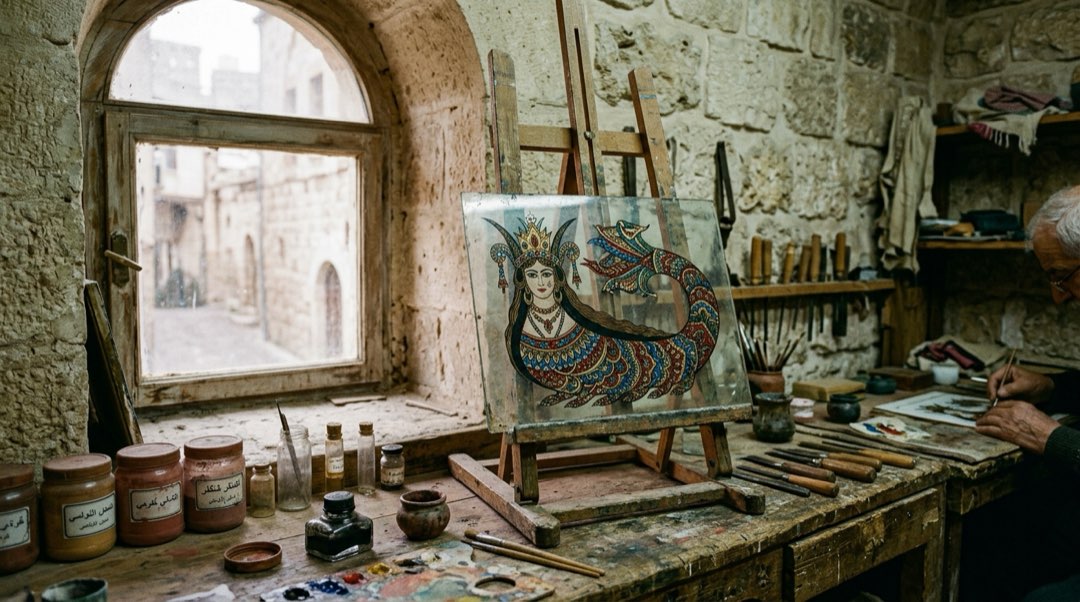
Roaming the stone mansions of Southeastern Anatolia and the narrow lanes of Mardin, one frequently encounters paintings of a half-woman, half-serpent figure on shopfronts and thresholds. This is Shahmaran, Mesopotamia's millennia-old ancient sage. According to the legend, Shahmaran, dwelling peacefully with her serpents in a splendid subterranean oasis, welcomes a poor youth named Camsab trapped in a deep well. She teaches him medicine, healing herbs, and earth's secrets, demanding but one condition: that he never betray her sanctuary.
The tale delivers a piercing lesson on human frailty and the bitter aftermath of broken trust. The vizier seeking a remedy for the monarch's incurable affliction deceives Camsab, and Shahmaran is brought to the surface to be sacrificed. Yet even in death Shahmaran harbors no malice; she bequeaths her wisdom to Camsab, letting life spring forth even from her demise. For centuries Anatolian families have hung her reverse-glass paintings on their finest walls, viewing Shahmaran not as a monster, but as the eternal icon of fidelity, nature, and healing.