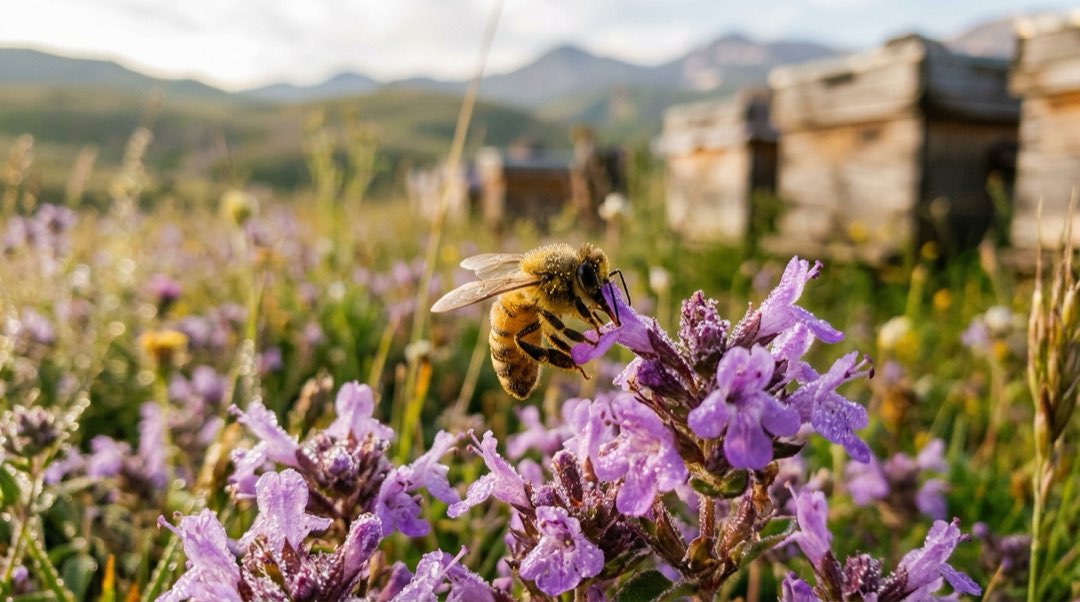
There are catastrophes that unfold in silence; they arrive without deafening explosions and topple no towers, yet dislodge the cornerstones of life. The precipitous decline of the world's bee population represents precisely such a crisis. Tiny pollen grains ferried from blossom to blossom are in truth the most critical architects of our global food system. While we boast of high-tech greenhouse investments or AI-powered harvest machines, we owe one out of every three mouthfuls on market shelves to an insect with wings a few millimeters wide.
What, then, if bees were to vanish altogether? This scenario implies far more than honey disappearing from breakfast tables; it would induce an irreparable fracture in the ecosystem's backbone. Yields of hundreds of staple crops from apples to almonds, and cotton to coffee would plummet to rock bottom. Subsequently, forage fodder like alfalfa feeding livestock would wither, spreading the catastrophe directly into animal husbandry. Scenes in parts of China where farmers pollinate apple trees by hand with tiny brushes serve as a poignant warning of what might await us.