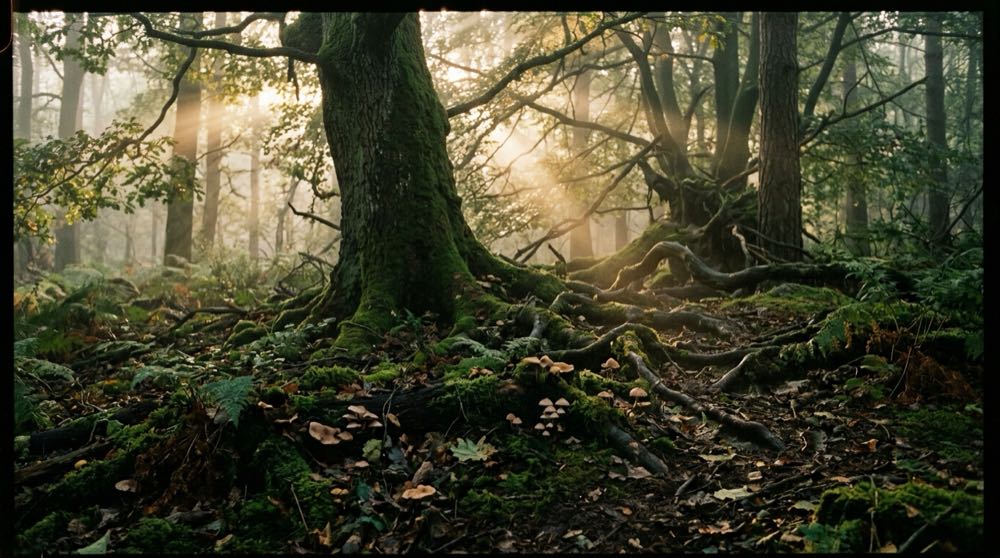
Walking through a forest, we usually perceive surrounding trees as silent, standalone giants standing independently. Yet beneath our feet, mere centimeters deep in the soil, stretches an astonishing network of communication and resource sharing. This microscopic partnership between fungal filaments and tree roots is hailed by contemporary biologists as the 'Wood Wide Web' or the forest internet. Through these subterranean highways, trees do far more than trade water and sugars; they actively warn one another of impending perils.
The mechanism operates with awe-inspiring precision. For instance, an oak tree infested by destructive caterpillars instantly dispatches chemical alarm cues across the fungal grid via its roots. Neighboring trees receiving the warning increase tannin in their foliage before the pests even arrive, rendering leaves unpalatable and toxic. Furthermore, mature 'mother trees' continually pump carbon supplements through the grid to shaded saplings unable to photosynthesize adequately. The forest is no cutthroat battleground of rivalry; it is a colossal community grounded in mutual aid.