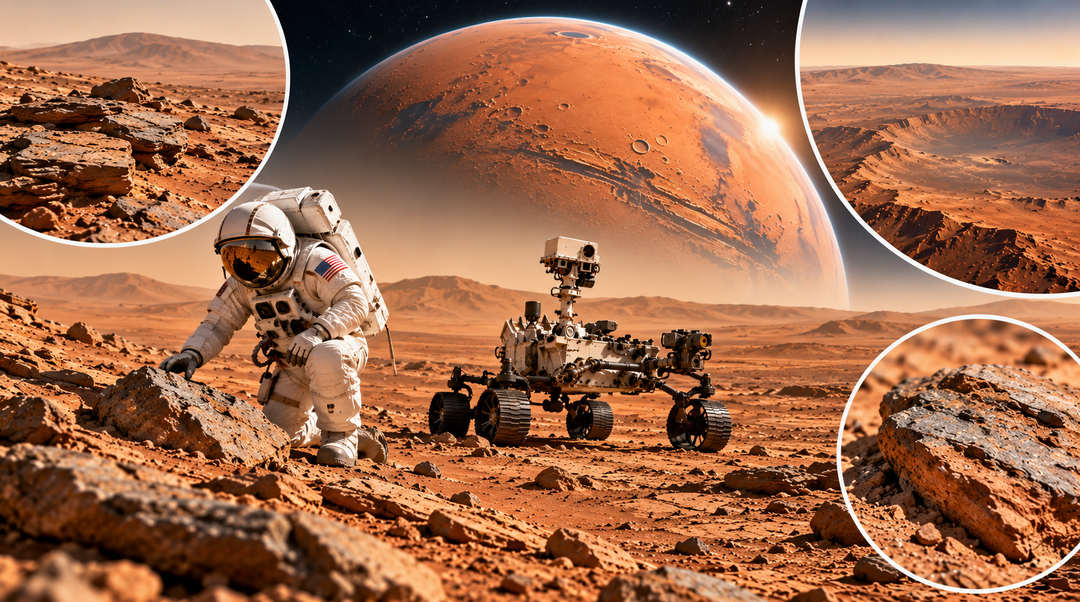
The possibility of humans living on Mars is among the most ambitious goals of space exploration. Yet reaching another planet is only part of the challenge. A more fundamental question is whether the conditions Earth provides naturally could be recreated through artificial systems. Mars's rocky landscape, seasonal changes, and day length similar to Earth's make it particularly interesting to researchers. Geological evidence also indicates that rivers and lakes existed there in the distant past. However, evidence of ancient water should not be confused with proof that today's environment could support human habitation.
The main obstacles arise from Mars's physical environment. Average surface temperatures are around minus 60 degrees Celsius, while atmospheric pressure is less than one percent of Earth's. Its predominantly carbon dioxide atmosphere cannot supply breathable air. Although water ice has been identified in several regions, its accessibility, the energy needed to extract it, and its conversion into safe drinking water remain significant challenges. Moreover, the thin atmosphere provides inadequate protection against high-energy particles from space. Prolonged radiation exposure could pose serious health risks.
Any future habitat would require controlled systems operating largely independently of the external environment. Maintaining appropriate air pressure, regulating oxygen concentrations, removing carbon dioxide, and controlling temperature would all be essential. To limit radiation exposure, engineers are investigating shielding, structures covered with Martian soil, and underground habitats. Astronauts working outside would require pressurized suits with independent life-support equipment. Redundant systems would also be vital: a single equipment failure must not endanger an entire settlement. Assistance from Earth could not arrive quickly.
Reducing dependence on supplies from Earth would be central to long-term habitation. Extracting water from Martian ice and purifying wastewater could help, provided that suitable equipment and sufficient energy were available. Growing crops in controlled environments might contribute to food supplies, although systems capable of meeting an entire settlement's nutritional needs have not been demonstrated. NASA's MOXIE experiment successfully demonstrated oxygen production from carbon dioxide in the Martian atmosphere. Nevertheless, turning this achievement into a reliable, continuous, high-capacity life-support system would be a separate engineering challenge.
Ultimately, sustainable habitation would depend on integrating numerous technologies rather than achieving a single breakthrough. Dependable energy would be indispensable, especially because prolonged dust storms could interfere with solar power. Nuclear power is being investigated, but practical implementation would need further evaluation. The long-term effects of Martian gravity on bones, muscles, and other bodily systems remain poorly understood. Medical care, psychological resilience, and limited assistance from Earth would add complications. A temporary expedition and a permanent, largely self-sufficient settlement are fundamentally different undertakings. Continued research will help determine whether the gap between them can be overcome.